A result shows what happened. A few minutes of writing after each session show how it happened — and a report turns a month or a season of entries into one conversation between athlete and coach.
Fictional data · Nick M., U16, coach Christoph N. · a short preview of a monthly report.
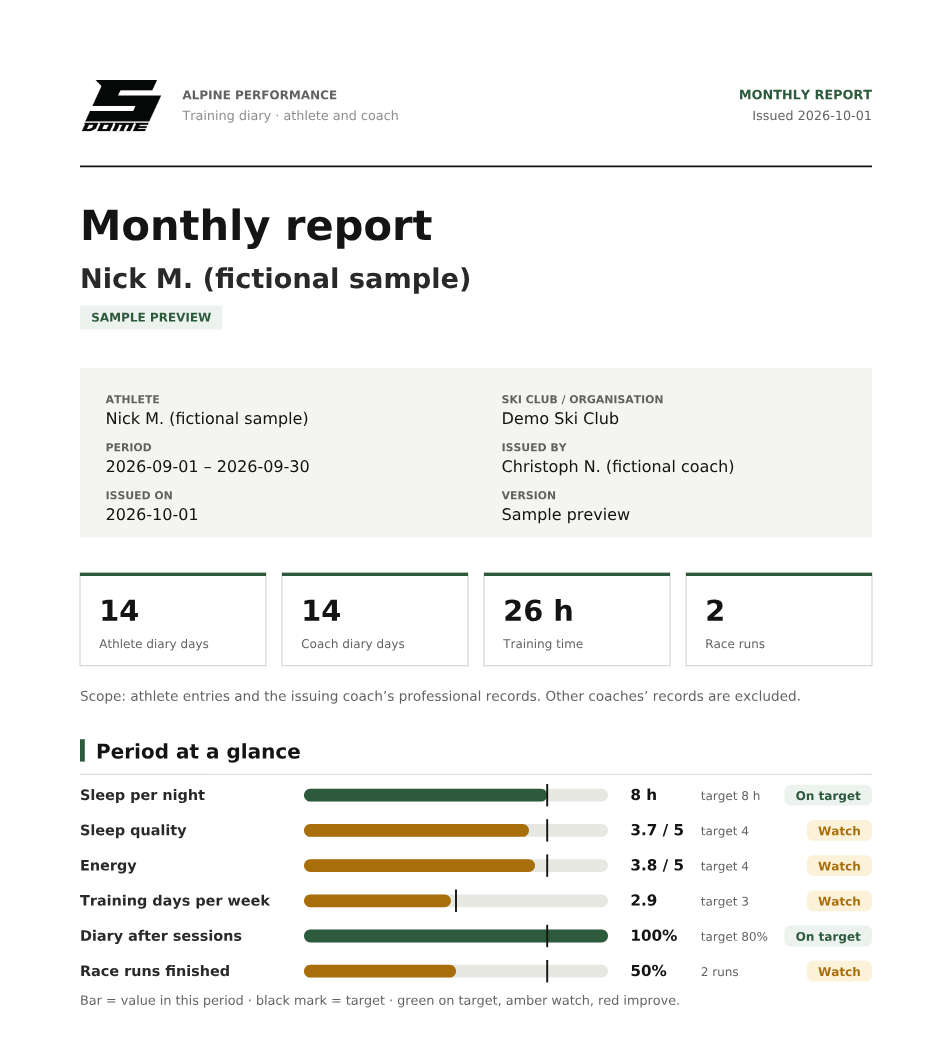
EnlargeMonthly report · page 1Fictional dataA month of entries in one PDF, opening with a colour summary of the key values against their targets.
Why keep a training diary
Patterns you would miss
How you feel, sleep and train looks different over weeks than on a single day.
Context behind results
Sleep, food, travel and conditions help explain a good or a difficult day.
Two views of one session
The athlete’s experience next to the coach’s observation — where they agree and where they differ.
One agreed next step
Small, concrete changes that are followed up instead of forgotten.
What a report shows
Training, race and rest days, disciplines and training time for the period
Race runs, with did-not-finish, did-not-start and disqualified runs counted separately
How the athlete felt and slept over the period, with missing answers shown as missing
The athlete’s and the coach’s ratings side by side on the same 1–5 scale, for example how well the goal was achieved
The errors the coach noted most often — and which of them the athlete noticed too
Agreed actions and how they were followed up
The week plan against the recorded sessions, with the training load week by week
The coach’s recommendation for the next period
A colour summary on the first page: sleep, energy, training regularity and other key values against their targets — green on target, amber watch, red improve
What went well, the areas to improve with their priority, and up to three targets for the next period that the next report checks
At the end of the season: a season closing with the points to work on next season
Coaches issue monthly, quarterly, six-month and annual reports — for one athlete or a whole group at once. Each report uses the athlete’s entries and the issuing coach’s own records only. Parents receive a version without diary entries. A report supports the conversation; it gives no diagnosis and no talent score.
 ALPINE PERFORMANCESign in